LATERAL CHEST
Lateral Chest Projection Protocol
Exposure Factors
High Exposure: Parameters for optimal visualization of thoracic structures
Visible Anatomical Structure
The following must be clearly observed:
- Aortic Arch
- Lungs in their entirety
- Posterior and anterior Ribs
- Sternal Manubrium
- Main Bronchi
- Sternal Angle
- Costodiaphragmatic Recesses (Costophrenic angles)
- Left and right Diaphragmatic Cupulae
- Thoracic Vertebral Bodies
Plate Size and Orientation
Longitudinal orientation to cover the entire thoracic cavity
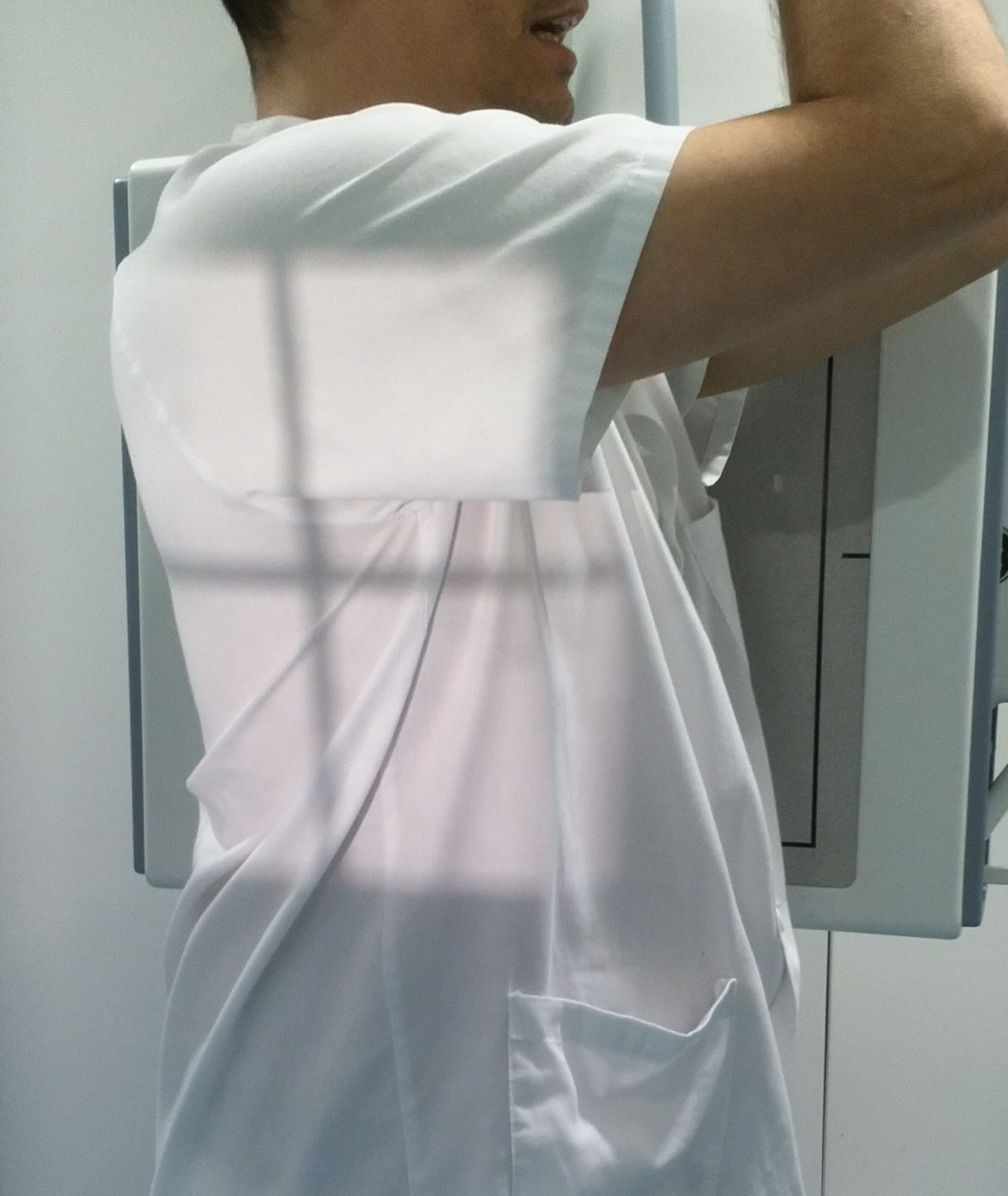
Patient Positioning
Central Ray Point
Location: Directed to the mid-coronal plane at the level of the inferior angle of the scapula
Angulation: Horizontal (0°)
Important: The ray must be horizontal and directed to the center of the thoracic cavity
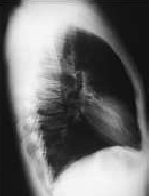
Optimal Image Characteristics
Non-magnified Heart
Thanks to left lateral position
Lung Apices
Completely visible
Diaphragm
Both cupulae differentiated
Vertebral Bodies
Thoracic vertebrae clearly visible
Common Technical Challenges
Frequent issues in lateral chest projection:
- Arm superimposition over lung fields
- Lung apices not included due to poor cassette positioning
- Patient rotation affecting structural symmetry
- Insufficient inspiration limiting lung visualization
Solution: Verify arms are correctly raised and patient performs deep inspiration
Patient Instructions
"Take a deep breath and hold it during the exposure"
Perform deep inspiration just before the exposure and hold breath (apnea)
SPECIAL CONSIDERATIONS
To obtain an optimal lateral chest image:
- Patient always upright whenever possible
- Left side against the bucky to minimize cardiac magnification
- Full arm elevation to avoid superimposition
- Verify that lung apices are included in the field
Goal: Full visualization of lung fields and mediastinum
Technical Variations
Bedridden Patient
Perform in lateral decubitus with direct cassette technique.
Geriatric Patient
Possible kyphosis requires adjustment in arm position.
Pediatric Patient
Reduce kV and mAs according to age and ALARA protocol.